Industry Background: From Drying to Integrated Granulation and Quality Control
Across industries such as food, pharmaceuticals, and fine chemicals, an increasing number of materials are processed in the form of solutions, emulsions, or slurries. Conventional drying methods alone are often insufficient to meet the growing requirements for particle uniformity, flowability, and solubility.
Under continuous production conditions, manufacturers are placing more emphasis on integrated processes that can convert liquid feed into stable powder or granules while maintaining consistent product quality. As a result, pressure spray granulation systems are becoming a critical unit in modern processing lines.
Process Insight: How Pressure Spray Granulation Works
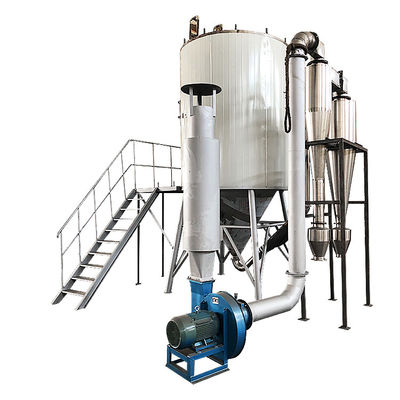
Pressure spray granulation drying systems utilize a high-pressure pump (typically 2–10 MPa) to atomize liquid feed into fine droplets. These droplets are exposed to hot air at 300–350°C, enabling rapid heat exchange and moisture evaporation within a short residence time.
Key process characteristics include:
- Adjustable droplet size through pressure and nozzle configuration
- Short drying time (seconds-level residence time) suitable for certain heat-sensitive materials
- Final product moisture content typically controlled below 5% (as low as ~0.5%)
- Simultaneous drying and granulation within a single system
These parameters form the foundation for both process efficiency and product quality control.
Application Trends Across Industries
Food and Additives
Widely used in the production of instant powders and functional ingredients, where solubility and particle consistency are essential.
Pharmaceutical and Biotech
Suitable for materials requiring strict control over particle size distribution and moisture content, ensuring batch consistency.
Chemical Processing
Applied in slurry drying processes to address challenges such as poor flowability and agglomeration.
Ceramics and Inorganic Materials
Used in powder preparation stages where stable particle size distribution is required before shaping or sintering.
Selection Guidelines: Matching Parameters to Process Needs
1. Atomization Pressure
A pressure range of 2–10 MPa plays a key role in determining droplet size and final particle uniformity.
2. Thermal Conditions
Inlet air temperatures of 300–350°C should be adjusted based on material sensitivity to balance drying efficiency and product integrity.
3. Processing Capacity
Typical evaporation capacity ranges from 50 to 1000 kg/h, supporting both pilot and industrial-scale production.
4. Product Specifications
Target moisture content, particle size range, and flowability should be validated during process optimization.
Industry Outlook: From Equipment to Process Integration
The role of pressure spray granulation systems is evolving from standalone equipment to part of a broader integrated processing solution.
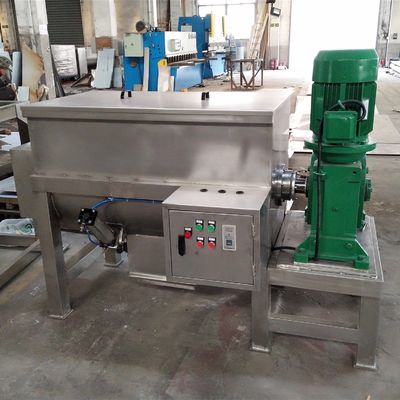
This includes coordination with upstream mixing systems and downstream conveying or packaging, as well as increasing demand for automation and process control.
As the need for efficient liquid-to-powder processing continues to grow, pressure spray granulation offers a balanced approach to achieving drying efficiency, particle quality, and process stability, making it a key technology in modern powder manufacturing.



 Your message must be between 20-3,000 characters!